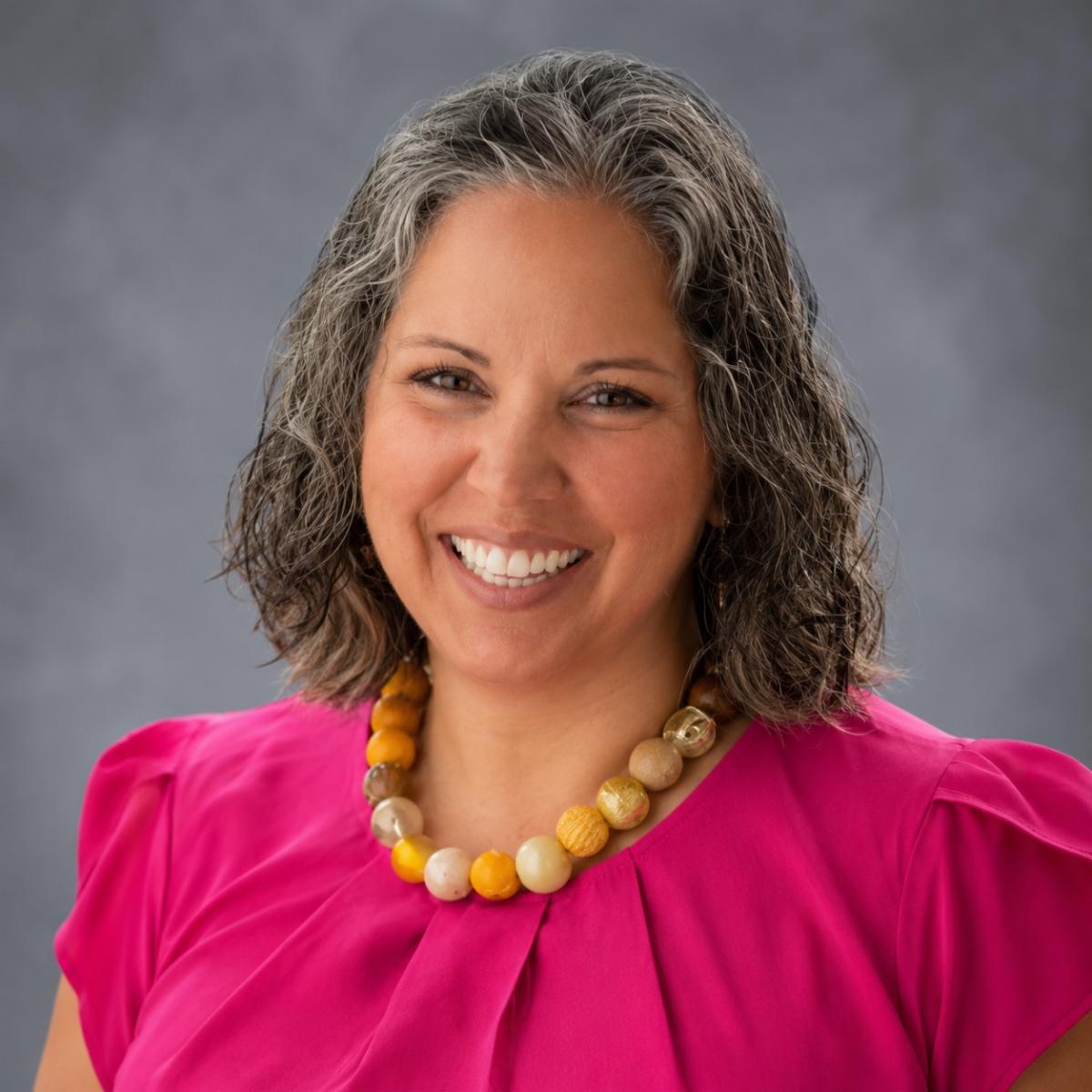
NDNU School of Education Dean Dr. Kelly Vaughn launches the Portrait of a Learner series with Emily Richards, exploring lifelong learning, supporting new teachers, and the importance of strong partnerships between universities and local schools.
By Dr. Kelly Vaughn, Dean, School of Education, Notre Dame de Namur University
At Notre Dame de Namur University’s School of Education, learning does not end when someone earns a degree, completes a credential, or enters the classroom. Educators are lifelong learners, continually shaped by their students, colleagues, communities, and experiences.
This year, I am excited to launch our Portrait of a Learner series. Whether we are K-12 students, teacher candidates, classroom teachers, administrators, or university faculty, we are all learners. Throughout the year, we will highlight members of our NDNU community and educational partners whose stories remind us that learning is lifelong.
The series reflects the broader idea behind California’s Portrait of a Learner framework and its emphasis on preparing learners with the skills and mindsets needed to grow, contribute, and thrive. For more information about the Portrait of a Learner framework, please visit the California State Board of Education or Scaling Student Success.
For our first conversation, I am delighted to highlight Emily Richards, Far East Contra Costa County (FECCC) New Teacher Support Program Coordinator, NDNU adjunct faculty member, and lifelong learner whose journey offers powerful insights into the heart of education.
Emily’s story is one of unexpected inspiration, continual growth, and a commitment to helping educators see the potential in every student.
Kelly: When I first shared the idea of a "Portrait of a Learner" series with you, you immediately connected with it. Why?
Emily: I like the idea of portrait of a learner because it is modeling to our students who are learning to be teachers. You are the first learner in the classroom, and you are modeling learning, and it is never a finished practice. Yes, we are teachers, but a core component of being a teacher is being a learner.
Kelly: Tell us a little about yourself and the experiences that have most shaped who you are today.
Emily: I currently have the opportunity to be both adjunct faculty here at NDNU and part of the Far East Contra Costa County Consortium, where I support new teachers through induction, internships, and residency programs. Before that, I was a literacy coach, worked with the UC Berkeley History-Social Science Project, and began my career as a middle school and high school history teacher. I thought I'd spend one year in middle school and return to high school, but I never left. It was the happiest I've ever been teaching. What's interesting is that I came from a family of educators. My father was a middle and high school band director, my mother was an elementary school teacher and principal, and my grandmother was an educator. But I did not want to be a teacher. I was convinced I was going to be a lawyer. In kindergarten, when asked what I wanted to be when I grew up, I wrote, 'Sandra Day O'Connor.'
I eventually went to law school and worked as an intern attorney in San Francisco's youth court system. While working in a youth drug court program, I noticed that the young people in the program were not returning to court the way I saw in other settings. When I asked why, one young man pointed to the principal of the court and community school and said, 'She believes in us. She tells us every single day that the mistakes you made and the choices you made are not who you have to be in the future. She believes that we can be better than we are right now.' That moment changed everything for me. I realized that if I wanted to help young people, I needed to be in schools. That young man helped me understand that educators are the people who get to positively influence young people's lives every day. I often wonder what happened to him because he changed the trajectory of my life.
What motivates me today really stems from that conversation. I want to help new teachers see students differently. I often think about how we can become curious about students' social-emotional behaviors instead of becoming judgmental. If we teach educators to approach students with curiosity, compassion, and a belief in their potential, we create classrooms where students can thrive and remain emotionally alive.
Kelly: What inspires your work today?
Emily: What motivates me now is supporting new teachers." "There's a book called Troublemakers that talks about students being the 'canaries in the coal mine' of our classrooms. They are the frontline indicator that there's a problem. Things are not going well in our classrooms." "What would happen if we started thinking about these students as the ones we need to listen to, as the ones giving us early feedback about what's working and what's not working?""How do you start getting curious about students' social-emotional behaviors as opposed to getting judgmental?
Kelly: What is at least one lesson or insight you have gained through your partnership with NDNU?
Emily: One of the things I have really appreciated in my time at NDNU is this culture of care and this culture of community. Oftentimes, local educational agencies and institutions of higher education can feel at odds with one another. An institution may be focused on credential requirements, while school districts are focused on what is happening in classrooms and the realities candidates will face. Sometimes those competing interests can leave the candidate stuck in the middle. What I appreciate about NDNU is that we model what we expect our students to do. When those competing interests arise, there is an expectation that we put the student at the center of the conversation and ask, 'What do we need to collaboratively do so that this student can find success?' We don't get to make the candidate navigate those waters alone.
I've appreciated being invited to the table with people like Carol [Piraino, General Education Credential Program Director], Sharon [O’Neil, Special Education, Credential Program Director], Kate [Maselli Zimman, Resident Teacher Programs Coordinator], and yourself and working together to find common ground and solutions in the best interest of our candidates. What has been especially meaningful is that the conversation goes beyond helping candidates succeed in a single class or semester. We're thinking about launching them into a lifetime career in education. Our students are learning from us all the time. Yes, they are learning content, but they are also learning how to be teachers. NDNU has reinforced for me the importance of being intentional about how we show up, collaborate, and model the attitudes and practices we hope future educators will carry into their own classrooms.
Kelly: When you think about a thriving NDNU community, what does it look like?
Emily: To me, a thriving NDNU community looks like a deep, profound, and sustained partnership with local educational agencies. We are not doing this work in isolation. We are collectively wrapping our arms around people who are choosing to go into this sacred profession and walking alongside them through those early years of becoming educators.
I also think about educators who are farther along in their careers. One of the things I love about being connected to higher education is access to new research, new ideas, and new ways of thinking. I think about opportunities like the training we attended through the Center for Reaching and Teaching the Whole Child and how those experiences inform our work with new teachers. The question for me is: How do veteran and seasoned educators continue to have access to that kind of learning and growth?
A thriving NDNU community creates opportunities for educators not only to learn at the beginning of their careers but to continue learning throughout their professional lives. It allows educators to engage with emerging topics like AI, social-emotional learning, and other best practices without necessarily committing to a multi-year degree program. Ultimately, when NDNU and our educational partners learn together, we are informing what good instruction looks like in classrooms. For me, that means students in our schools benefit, because together we are investing in educators at every stage of their journey.
Final Reflection
As I listened to Emily's story, I was struck by a recurring theme: learners remain open to growth, to new perspectives, and to unexpected teachers. In Emily's case, a young person in a courtroom helped her discover her calling. Today, she helps future educators discover theirs. Her words capture the spirit of this new series: "A core component of being a teacher is being a learner."