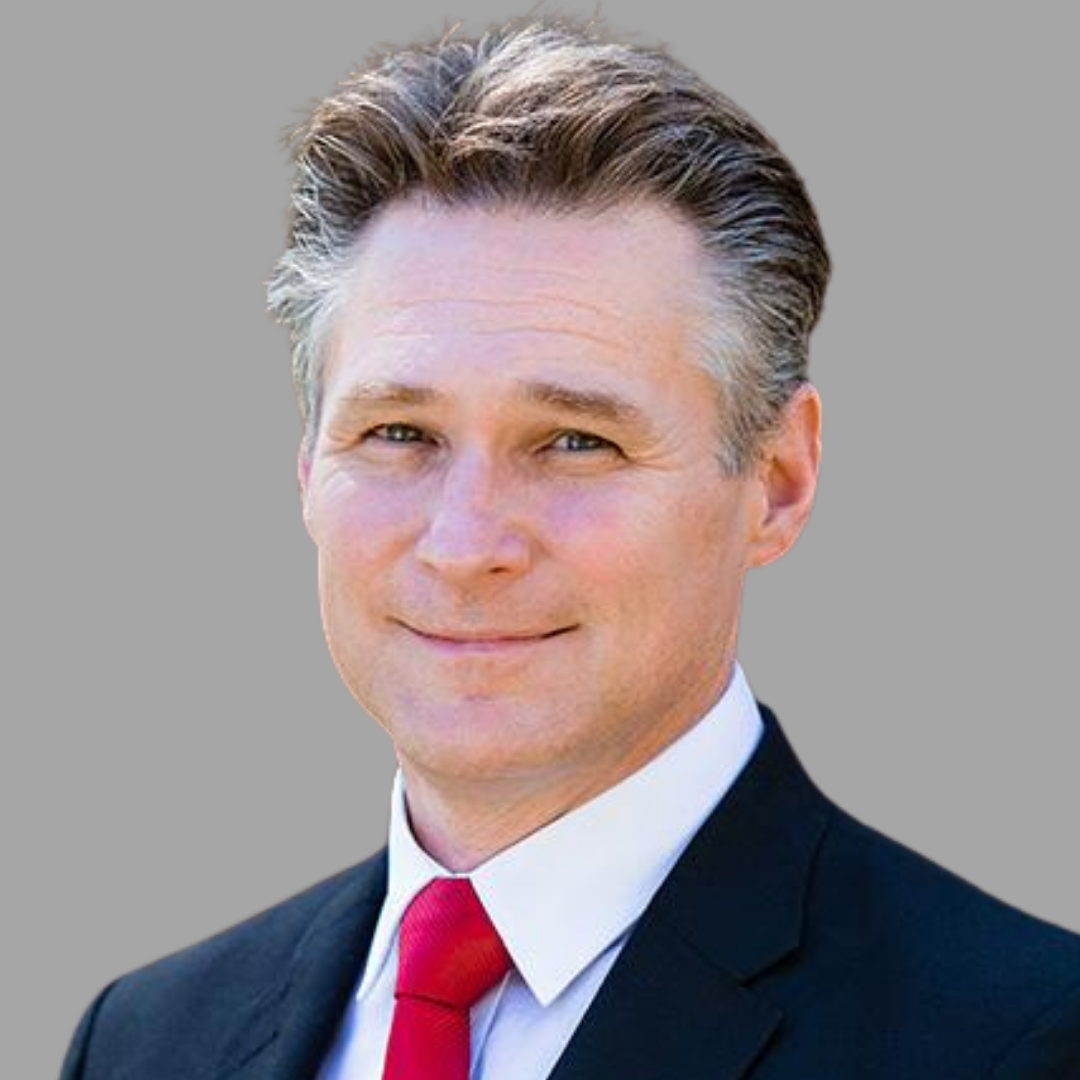
In Conversation with Greg Zubacz, Interim Provost
NDNU is delighted to announce the appointment of Greg Zubacz, PhD, JCD, MCL, JCL, LLB, as Interim Provost of Notre Dame de Namur University (NDNU). A familiar face around campus, Greg has served as Associate Provost and Dean of Interdisciplinary Studies at NDNU since 2024. He succeeds Greg White who retired earlier this month after 32 years with the university, most recently serving four years as Provost and Senior Vice President.
As Interim Provost, Greg serves on the Cabinet and provides leadership across academic affairs and institutional effectiveness as NDNU continues its transformation into a modern, graduate-focused university. His experience with accreditation processes, data-informed strategy, and academic innovation are invaluable as we advance our strategic priorities and uphold our commitment to academic excellence.
We recently sat down with Greg to learn more about his extensive background and career highlights. Enjoy!
Where did you grow up, and what were some of your early formative experiences?
I grew up in Canada in a Ukrainian immigrant family where Ukrainian was my first language at home. Faith, education, and service were always central to our values. From an early age I was deeply involved in church life and community activities, which helped shape my sense of responsibility and vocation. I attended a Jesuit high school where faith was closely integrated with academics. Those experiences instilled in me a strong commitment to service and leadership, particularly through institutions that form people intellectually and morally. I was also drawn early to questions of law, justice, and ethics, which later guided many of my academic and professional choices.
Your background is truly impressive. Could you walk us through your academic journey and career path?
My academic path began in Canada, where I earned my undergraduate degree in psychology and criminology and then pursued legal studies, eventually completing an LLB (JD in the US) at the Faculty of Law at the University of Manitoba. After passing the bar exams for two jurisdictions, I practiced law for seven years. I continued my studies when I went to seminary for the Ukrainian Catholic Church once they began ordaining married priests, earning a JCL and JCD from Saint Paul University and a JCD and PHD at the University of Ottawa. My academic focus is on the constitutional law pertaining to freedom of religion. I did postgraduate work in Legal and Ethical Issues for Health Care Providers, Osgoode Hall Law School/Faculty of Medicine, University of Toronto, and Clinical Drug Development and Regulation, Tufts University/University of Ottawa.
Along the way, I also pursued specialized training in areas such as mediation, regulatory policy, applied data science, and higher education leadership, including programs at MIT, IBM, and WSCUC’s Assessment Leadership Academy. Most recently, I am completing the CIC Senior Leadership Academy to prepare for my new role as Interim Provost.
Professionally, I began my career in private law practice, and later moved into the federal government in Canada, working in Ottawa at the Privy Council, Regulatory Affairs Office and afterwards in Health Canada. I served as Cabinet Committee Secretary to the Manitoba Legislature and worked for the Manitoba Department of Justice. I am currently a peer reviewer for US Department of Justice programs, and as a former Captain in the Royal Canadian Air Force, the Canadian Institute for Military & Veteran Health Research – College of Peer Reviewers.
After moving into academia, I served as a professor, teaching in the areas of peacemaking and conflict studies, conflict resolution, mediation, business law, health care law, international law, criminal law and procedure, human rights, the sociology of religion, and political science. I am a lifetime member of Pi Gamma Mu International Honor Society in Social Sciences and belong to the Ukrainian Academy of Arts and Sciences.
I then moved into academic leadership roles including Director of the Center for Peacemaking and Conflict Studies, Program Director in Criminology, AVP of Institutional Effectiveness, Assessment, and Research, and Associate Provost and Accreditation Liaison Officer. These experiences eventually led me to NDNU.
What initially attracted you to NDNU, and since joining the university, which accomplishments have brought you the most satisfaction?
NDNU’s historic mission and its commitment to educating students in a values-centered environment based in the Hallmarks of the Sisters of Notre Dame de Namur were what first drew me to the institution. As a Catholic university with a strong tradition of service, social justice, and intellectual inquiry, it aligns closely with my own academic and personal commitments.
Since joining NDNU, I have been particularly proud of our institutional accomplishments in accreditation and strengthening institutional planning, accreditation readiness, and interdisciplinary academic programming, assessment, online learning, and AI. Most recently we succeeded in having our accreditation status renewed for another six years with WSCUC. Helping to build structures that support assessment, academic quality, and long-term sustainability has been deeply satisfying because it directly impacts the university’s ability to serve students and the broader community. I have also appreciated the opportunity to collaborate with faculty and staff across disciplines in developing new initiatives that help the institution prepare students for emerging fields and challenges.
How are your job responsibilities changing and/or expanding as the Interim Provost?
As Interim Provost, my responsibilities are expanding to serve as Chief Academic Officer of NDNU, and Senior Vice President for Academic Affairs, which encompasses academic programs, accreditation, faculty governance, and union issues. The role also requires coordinating across multiple divisions of the university to ensure alignment between academic priorities, operational planning, and long-term institutional strategy. In practical terms, it means working closely with faculty leadership, academic departments, and senior administration to ensure that NDNU continues to strengthen its academic mission while maintaining strong governance, compliance, and program quality.
Can you speak to your role as priest for the Ukrainian Catholic Church and your active involvement with the Diocese of Fresno?
In addition to my academic work, I serve as a priest in the Ukrainian Catholic Church and assist the Diocese of Fresno as a bi-ritual substitute priest. This ministry is deeply meaningful to me because it connects my academic life with pastoral service. Through the church I have the opportunity to serve communities spiritually and support parish life. My involvement also extends to leadership roles within the Ukrainian community. I minister to Ukrainian families in the Central Valley who have been displaced by the war. They are coping with the difficulties of building a new life in a new country, while struggling with grief and coping with deep personal traumatic loss. Balancing ministry and academic leadership has been very rewarding because both callings are ultimately about forming people and strengthening communities.
Ukrainian Catholic priests fortunately can be married, and my wife and three daughters are a great support in my ministry. They lead the congregational singing and assist with the running of the parish in many ways.
What do you do for fun outside the university and your clergy responsibilities? What are some of your hobbies or interests?
I enjoy a range of activities that keep me active and engaged. I have enjoyed outdoor and adventure activities including skiing, scuba diving, motorcycling, sport parachuting and waterskiing.
I also spend time volunteering and supporting charitable initiatives in the community. I serve as an auctioneer for a number of local charities. I have also been a commentator on the Ukraine war on all major networks including ABC, CBS, NBC, Fox, GV Wire, and iHeart Radio.
Most importantly, I value spending time with family and participating in church and local community events. Those experiences help keep me grounded and remind me why the work we do in education and service is so important. I am the dad of three daughters so that fills up much of my time.